

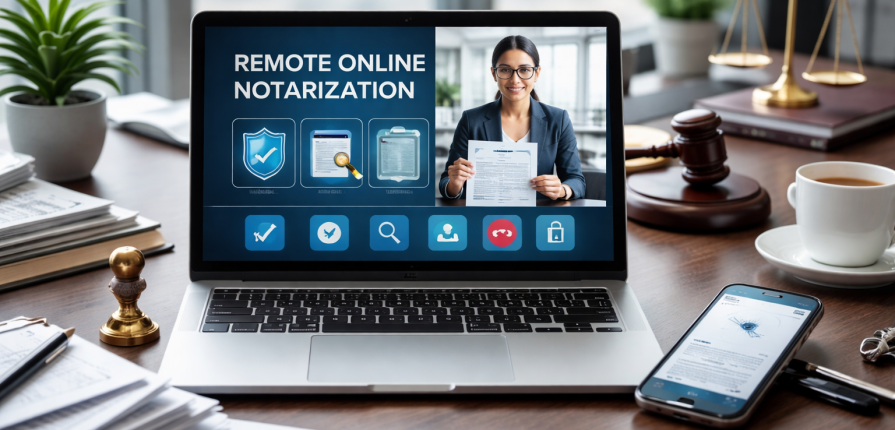
Remote Online Notarization (RON) is transforming how legal documents are notarized in the United States. As technology evolves and businesses operate across state lines, understanding Remote Online Notarization regulations by state has become essential for individuals, law firms, lenders, and international clients.
In this 2026 guide, we explain how RON works, how state laws differ, compliance requirements, challenges, and best practices.
What Is Remote Online Notarization (RON)?
Remote Online Notarization (RON) allows a notary public to notarize documents electronically using:
- Secure audio-video technology
- Identity verification tools
- Digital signatures
- Electronic seals
Unlike traditional in-person notarization or mobile notary services, RON enables the signer and notary to be in different physical locations.
Why Remote Online Notarization Is Growing in 2026
RON adoption increased significantly after 2020 due to remote work, real estate digitization, and interstate transactions.
Key reasons for growth:
- Faster document processing
- Cross-state transactions
- Digital mortgage and loan signings
- Reduced travel costs
- Increased convenience
However, compliance remains state-specific — which is why understanding Remote Online Notarization regulations by state is critical.
Remote Online Notarization Regulations by State (2026 Overview)
As of 2026:
- Most U.S. states have permanently authorized RON.
- Some states require the notary to be physically located within the state.
- Some states allow out-of-state signers.
- Technology provider approval varies by jurisdiction.
States with Permanent RON Laws
Many states have enacted permanent RON statutes with strict compliance standards, including:
- Identity proofing via Knowledge-Based Authentication (KBA)
- Credential analysis
- Mandatory recording retention (5–10 years depending on state)
States with Additional Restrictions
Certain states impose:
- Additional registration requirements for notaries
- Platform approval mandates
- Higher insurance or bond requirements
Because laws evolve annually, checking updated state statutes is essential before conducting remote notarizations.
Key Compliance Requirements Across States
Although regulations vary, most states require:
1️⃣ Identity Verification
Two-step identity proofing:
- Credential analysis (government ID scan)
- Knowledge-based authentication questions
2️⃣ Audio-Video Recording
RON sessions must be recorded and stored securely for several years.
3️⃣ Digital Seal and Signature
The notary must apply a secure electronic seal that is tamper-evident.
4️⃣ Secure Platform Use
Notaries must use approved platforms that comply with state cybersecurity requirements.
Failure to comply can result in:
- Rejected documents
- Legal disputes
- Disciplinary action
Common Challenges in Remote Online Notarization
Despite its advantages, RON comes with challenges.
⚠️ 1. Interstate Recognition Issues
Not all states recognize RON documents from other states in the same way.
⚠️ 2. Technology Barriers
Elderly or non-tech-savvy signers may struggle with digital platforms.
⚠️ 3. International Acceptance
Many foreign countries may not accept remotely notarized documents for apostille or legalization.
⚠️ 4. Fraud and Cybersecurity Risks
Although RON platforms use encryption, cyber threats remain a concern.
RON vs Mobile Notary: Which Is Better?
| Feature | Remote Online Notarization | Mobile Notary |
| In-person required | No | Yes |
| Speed | Fast | Moderate |
| Ideal for interstate | Yes | Limited |
| Technology required | Yes | No |
| International acceptance | Limited | Higher |
While RON offers convenience, mobile notary services may be preferable for high-value legal or international documents.
Best Practices for Businesses Using RON in 2026
To stay compliant and avoid document rejection:
✅ Verify State Laws Before Scheduling
Always confirm whether both signer and notary state laws allow RON.
✅ Use Approved Platforms Only
Avoid unauthorized or non-compliant software.
✅ Maintain Secure Record Retention
Follow mandatory storage timelines.
✅ Consult Experts for International Documents
If documents require apostille or embassy legalization, confirm RON acceptance beforehand.
Can RON Documents Be Apostilled?
This is a major question in 2026.
The answer depends on:
- The state where notarization occurred
- Whether the Secretary of State accepts electronic notarization
- The destination country’s acceptance rules
In many cases, traditional in-person notarization is still preferred for international use.
The Future of Remote Online Notarization
By 2026 and beyond, we expect:
- Standardized federal guidance
- Stronger cybersecurity frameworks
- Wider international recognition
- AI-driven identity verification
- Blockchain-based notarization trails
Remote Online Notarization regulations by state will continue evolving as technology and legal frameworks advance.
Frequently Asked Questions (FAQ)
Is Remote Online Notarization legal in all states?
Most states allow RON in 2026, but rules differ regarding registration, identity verification, and technology use.
Can I notarize documents for someone in another state?
In many cases, yes — if your state permits notarizing for out-of-state signers.
Are RON documents legally binding?
Yes, when conducted according to state law requirements.
Is RON accepted internationally?
Acceptance varies by country and document type.
Final Thoughts
Understanding Remote Online Notarization regulations by state is essential for individuals and businesses operating in a digital-first environment. While RON offers convenience and speed, compliance varies significantly across jurisdictions.
Before choosing remote notarization, always verify legal requirements and consider whether traditional or mobile notarization may better suit your needs.
Recent Comments